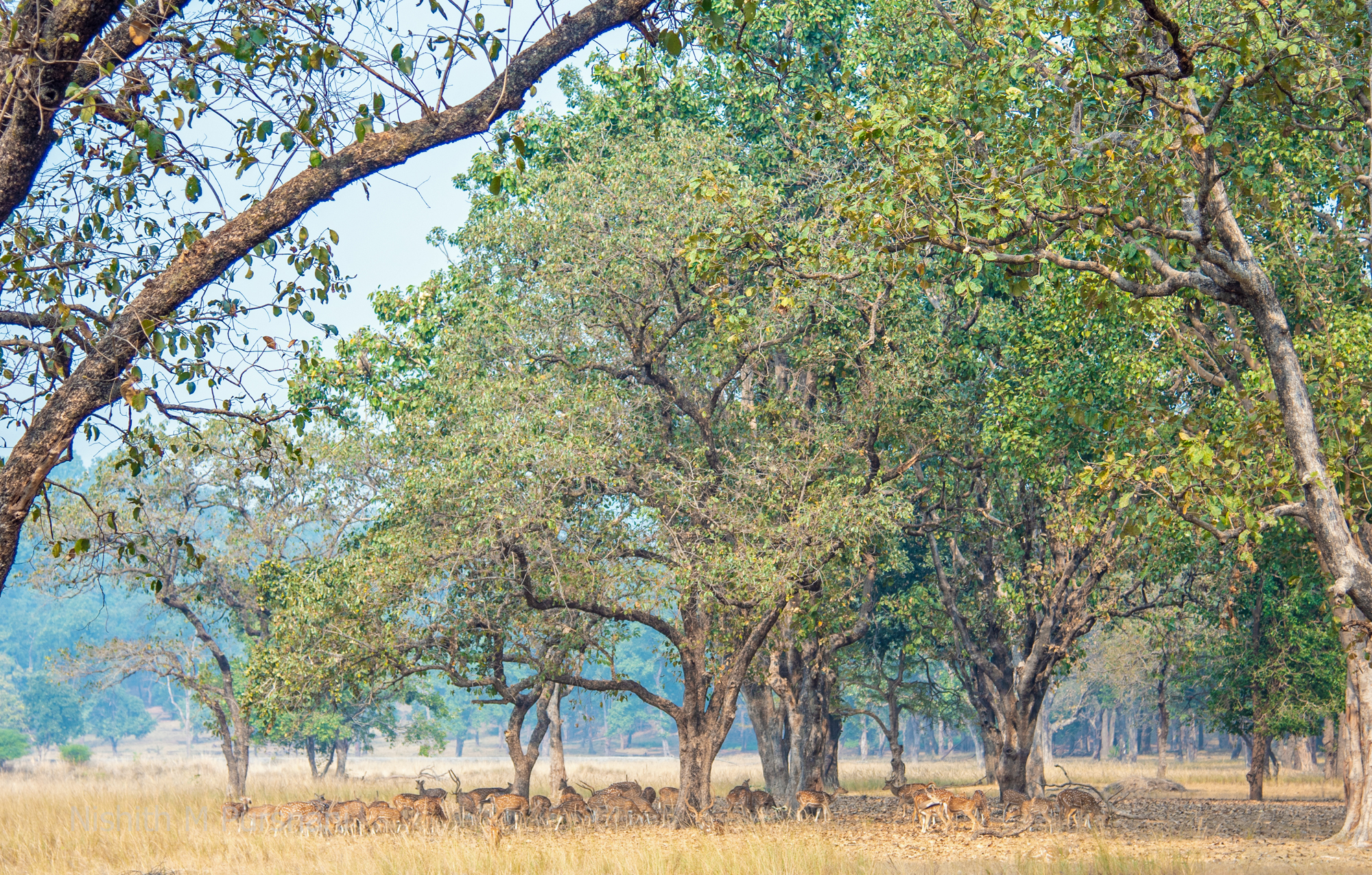
Indian Forest
A forest is an area of land dominated by trees. It is the most important part of Earth's
eco-system. It plays an important role to make a healthy environment and reduce air
pollution. There are three general types of forest found on earth: Temperate, Tropical, and
Boreal(also known as taiga). In India forest can be classified in five major categories
named as Moist tropical forest,Dry tropical forest,Montane temperate forest,Montane sub
tropical forest, and Alpine forest. India's total forest cover is about 19.26% of total land
area of India.
Moist tropical forest: As the name suggest: Moist tropical, this type of forest receives good annual rainfall of around 200 cms and 250 cms. Moist tropical forest are also called as semi-evergreen forests and are found along the Western ghats, lower slopes of the eastern Himalayas, eastern cost line of India especially Orissa coast and its neighbouring hills.
Dry tropical forest: This type of forest is mainly found in India where average annual rainfall ranges from 51 cms to 151 cms. Trees of dry tropical forest shed its leaves in winter season (due to the dry winter weather). The shedding of leaves helps trees conserve water and energy. As dry weather approaches, hormones in the trees trigger the process of abscission, whereby the leaves are actively cut off the tree and new leaves are generated after winter season. During rainy season these types of forest are completely decorate lush green leaves. Some significant trees of dry tropical forest are sal, mangoes, acacia and bamboo. Northern hilly regions and some states of Southern India have this type of dry tropical forest.
Montane temperate forest: This type of forest is mainly found in India in hilly areas having a mid-high altitude and where average annual rainfall is above 200 cms, areas such as middle Himalayas ranges of northern India have Montane temperate forest. Some significant trees of Montane temperate forest are oak, ferns, maple, deodar, etc. Fauna includes Tibetan antelope, Yak, Sheeps, Goats, Red panda etc.
Montane sub tropical forest: Subtropical forests can be found around the edges of the tropics. Montane sub tropical forest are mainly found in eastern Indian states such as Nagaland, Mizoram, Meghalaya, Manipur, Arunachal Pradesh, etc. and also in few areas of Western ghats. Trees found in this forest types are sal, sandan, olive, etc.Fauna includes Wild boar, Spotted deer, Stag, etc.
Alpine Forest: This type of forest is common in the Himalayan regions at an elevation of above 3000m and grow up to the region just below the snowline. It is mainly a grassland and shrubland forest with vegetation that can grow upto 1.5m in height. The vegetation consists mainly of grasses, mosses, lichens, etc. whereas honeysuckle and willow are the common trees found here. Climatic conditions here vary from the sub-arctic to arctic, with snow covering the ground for almost over 6 months a year.
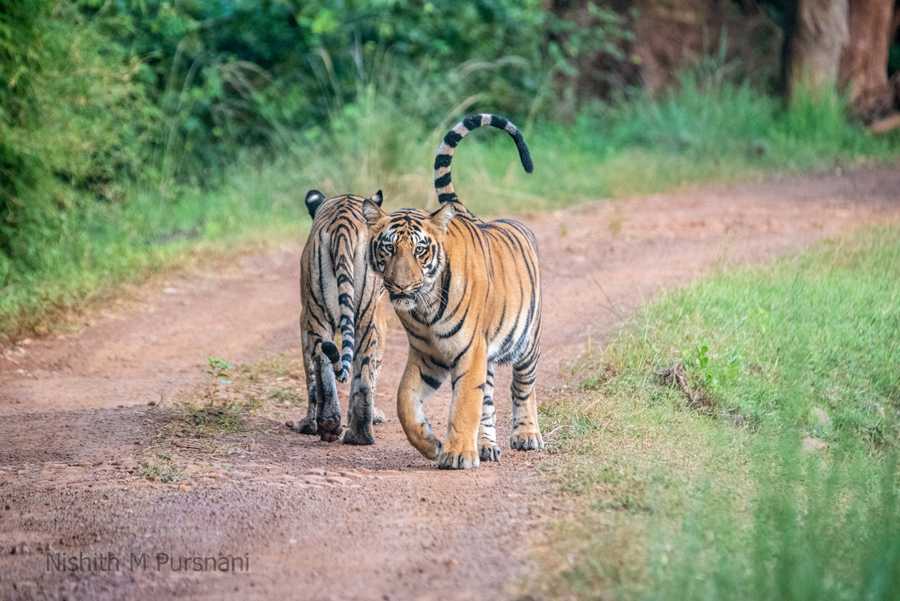
Tiger Reserves In India
Tiger Reserves are notified by State Governments as per provisions of Section 38V of the
Wildlife (Protection) Act, 1972 on advise of the National Tiger Conservation Authority and
are protected by the Forest Department of India. Hunting of wild animals, encroachment
and/or destruction of tiger habitat, construction of tourist hotels and other such
activities are prohibited in Tiger Reserve.
The notified area consists of a core and buffer area/zone. Limited part of core and buffer
area are kept open for tourist by forest department for Jungle safaries , where one can spot
wildlife in their natural habitat.
Difference between Core and Buffer:
Core area:Core area is a critical tiger habitat, and is strictly protected
by the forest department. It is actual forest area where tigers can live freely without
human interference. There are no human settlements or villages in core zone.
Buffer area: The area adjoining or surrounding the core area is called as
Buffer area or Peripheral area. Buffer area may be accorded a lesser degree of habitat
protection and is conserved along with limited human interference and might include
villages,eco-tourism, agriculture, etc.
| Sr No | Name of Tiger Reserve | State | Area of the core / critical tiger habitat (In Sq. Kms.) | Area of the buffer / peripheral (In Sq. Kms.) | Total area(In Sq.Kms.) |
|---|---|---|---|---|---|
| 1 | Nagarjunsagar Srisailam (part)* | Andhra Pradesh | 2595.72* | 700.59* | 3296.31* |
| 2 | Namdapha | Arunachal Pradesh | 1807.82 | 245 | 2052.82 |
| 3 | Kamlang Tiger Reserve | Arunachal Pradesh | 671 | 112 | 783 |
| 4 | Pakke | Arunachal Pradesh | 683.45 | 515 | 1198.45 |
| 5 | Manas | Assam | 840.04 | 2310.88 | 3150.92 |
| 6 | Nameri | Assam | 200 | 144 | 344 |
| 7 | Orang Tiger Reserve | Assam | 79.28 | 413.18 | 492.46 |
| 8 | Kaziranga | Assam | 625.58 | 548 | 1173.58 |
| 9 | Valmiki | Bihar | 598.45 | 300.93 | 899.38 |
| 10 | Udanti-Sitanadi | Chattisgarh | 851.09 | 991.45 | 1842.54 |
| 11 | Achanakmar | Chattisgarh | 626.195 | 287.822 | 914.017 |
| 12 | Indravati | Chhattisgarh | 1258.37 | 1540.7 | 2799.07 |
| 13 | Palamau | Jharkhand | 414.08 | 715.85 | 1129.93 |
| 14 | Bandipur | Karnataka | 872.24 | 584.06 | 1456.3 |
| 15 | Bhadra | Karnataka | 492.46 | 571.83 | 1064.29 |
| 16 | Dandeli-Anshi | Karnataka | 814.884 | 282.63 | 1097.514 |
| 17 | Nagarahole | Karnataka | 643.35 | 562.41 | 1205.76 |
| 18 | Biligiri Ranganatha Temple | Karnataka | 359.1 | 215.72 | 574.82 |
| 19 | Periyar | Kerala | 881 | 44 | 925 |
| 20 | Parambikulam | Kerala | 390.89 | 252.772 | 643.662 |
| 21 | Kanha | Madhya Pradesh | 917.43 | 1134.361 | 2051.791 |
| 22 | Pench | Madhya Pradesh | 411.33 | 768.30225 | 1179.63225 |
| 23 | Bandhavgarh | Madhya Pradesh | 716.903 | 820.03509 | 1598.1 |
| 24 | Panna | Madhya Pradesh | 576.13 | 1021.97** | 1578.55 |
| 25 | Satpura | Madhya Pradesh | 1339.264 | 794.04397 | 2133.30797 |
| 26 | Sanjay-Dubri | Madhya Pradesh | 812.571 | 861.931 | 1674.502 |
| 27 | Melghat | Maharashtra | 1500.49 | 1268.03 | 2768.52 |
| 28 | Tadoba-Andhari | Maharashtra | 625.82 | 1101.7711 | 1727.5911 |
| 29 | Pench | Maharashtra | 257.26 | 483.96 | 741.22 |
| 30 | Sahyadri | Maharashtra | 600.12 | 565.45 | 1165.57 |
| 31 | Nawegaon-Nagzira | Maharashtra | 653.674 | - | 653.674 |
| 32 | Bor | Maharashtra | 138.12 | - | 138.12 |
| 33 | Dampa | Mizoram | 500 | 488 | 988 |
| 34 | Similipal | Odisha | 1194.75 | 1555.25 | 2750 |
| 35 | Satkosia | Odisha | 523.61 | 440.26 | 963.87 |
| 36 | Ramgarh Vishdhari | Rajasthan | -- | -- | 1052.12 |
| 37 | Ranthambore | Rajasthan | 1113.364 | 297.9265 | 1411.291 |
| 38 | Sariska | Rajasthan | 881.1124 | 332.23 | 1213.342 |
| 39 | Mukandra Hills | Rajasthan | 417.17 | 342.82 | 759.99 |
| 40 | Kalakad-Mundanthurai | Tamil Nadu | 895 | 706.542 | 1601.542 |
| 41 | Anamalai | Tamil Nadu | 958.59 | 521.28 | 1479.87 |
| 42 | Mudumalai | Tamil Nadu | 321 | 367.59 | 688.59 |
| 43 | Sathyamangalam | Tamil Nadu | 793.49 | 614.91 | 1408.4 |
| 44 | Kawal | Telangana | 893.23 | 1125.89 | 2019.12 |
| 45 | Amrabad | Telangana | 2166.37* | 445.02* | 2611.39* |
| 46 | Dudhwa | Uttar Pradesh | 1093.79 | 1107.9848 | 2201.7748 |
| 47 | Pilibhit | Uttar Pradesh | 602.798 | 127.4518 | 730.2498 |
| 48A | Amangarh (buffer of Corbett TR) | Uttar Pradesh | - | 80.6 | 80.6 |
| 48B | Corbett | Uttarakhand | 821.99 | 466.32 | 1288.31 |
| 49 | Rajaji TR | Uttarakhand | 255.63 | 819.54 | 1075.17 |
| 50 | Sunderbans | West Bengal | 1699.62 | 885.27 | 2584.89 |
| 51 | Buxa | West Bengal | 390.5813 | 367.3225 | 757.9038 |
| 52 | Srivilliputhur Megamalai | Tamil Nadu | 641.86 | 374.7 | 1016.57 |

Source: http://www.wiienvis.nic.in/